
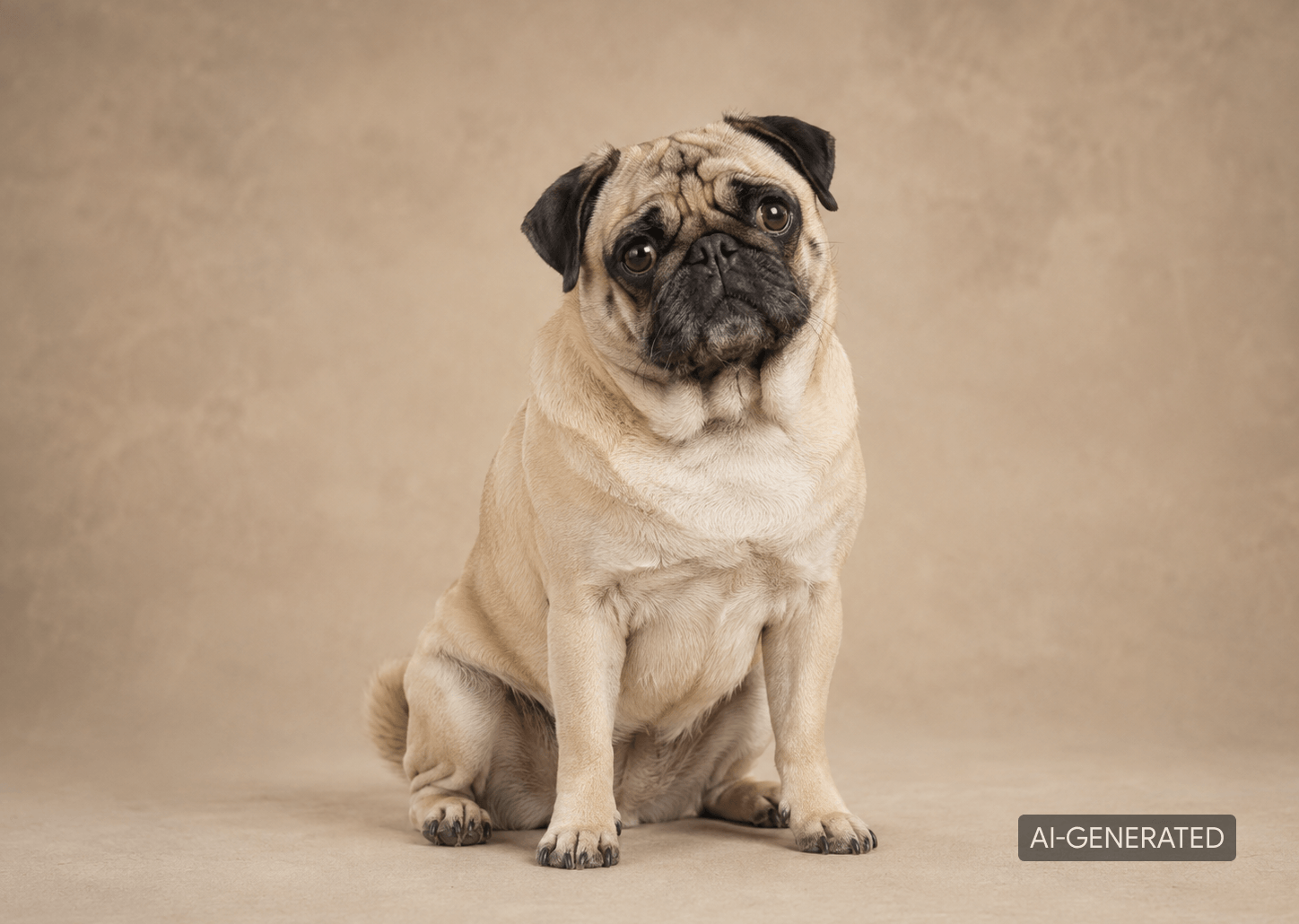
Pug
They are clowns. Pugs have a gift for comedy. They are playful, expressive and endlessly entertaining — and they know it.
They need you nearby. Pugs are not independent dogs. They follow their people from room to room and do not cope well with long hours alone.
They overheat easily. Their flat faces make breathing difficult in warm weather. Summer walks must be short, early and cool. Hot cars are dangerous.
They snore, snort and wheeze. This is a feature, not a bug — but if you need silence at night, a Pug in the bedroom will be a challenge.
- Pugs are a brachycephalic breed. Their flat faces cause real breathing difficulties — this is structural and cannot be trained away. In heat or after exertion, they can be in genuine distress.
- They are prone to obesity. Their appetite is large and their exercise tolerance is limited. Weight management is essential for their long-term health.
- Eye problems are common — their large, prominent eyes are vulnerable to injury and conditions like corneal ulcers.
- They do not cope well alone for long periods. Separation anxiety is a real issue.
- Vet bills can be significant. Pet insurance is strongly recommended.
- People in smaller homes who enjoy regular walks
- People who are home often
- Those who want a low-exercise companion
- Families with gentle children
- Active people wanting an outdoor companion
- Those living in hot climates without air conditioning
- People away from home for long hours
- Budget-conscious owners — health costs can be high
Pugs are prone to brachycephalic obstructive airway syndrome, eye conditions, skin fold infections and obesity. Pug Dog Encephalitis (PDE) is a serious neurological condition specific to the breed. Lifespan is 12–15 years. Pet insurance is strongly recommended.
Other dog breeds worth considering